November 6, 2026
Preventing falls is an important part of helping older adults maintain their safety, confidence, and independence. While falls can happen for many reasons, simple changes to everyday routines and living spaces can help reduce common risks. Understanding potential hazards, knowing when to ask for assistance, and working together can make a meaningful difference.
At Ridgemere Senior Living, I believe fall prevention starts with recognizing potential hazards and developing habits that support safe movement. The way an apartment is arranged, along with how residents move throughout the day, can make a significant difference in reducing fall risks.
As Wellness Director, I encourage residents, families, and team members to pay attention to these details and work together to create a safer living environment.
Some of the most common fall hazards in residents’ apartments include loose rugs, electrical cords, and overcrowded furniture arrangements.
Rugs and mats can shift, bunch up, or curl at the edges, creating unexpected tripping hazards. Removing loose rugs is generally the safest option.
If a resident chooses to keep a rug, I encourage families to make sure it has nonslip backing and lies flat against the floor. Rolled or raised edges should be addressed immediately.
Electrical cords are another concern. Cords that stretch across the middle of a room or run beneath rugs can create tripping hazards.
I recommend keeping cords organized along walls and behind furniture, away from walking paths. Residents should also avoid extension cords and have team members evaluate safer ways to access electrical outlets.
When appropriate and permitted by community safety guidelines, a properly rated surge-protected power strip may be an option. Electrical cords and devices should never create obstacles or additional safety risks.
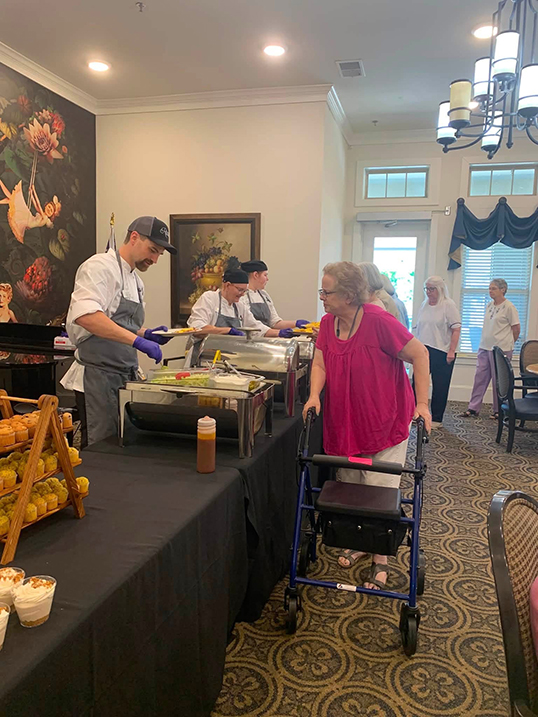
Furniture placement is equally important, particularly for residents who use walkers or wheelchairs.
Too much furniture can leave narrow spaces that are difficult to navigate. Residents may try to squeeze between items or accidentally catch their mobility devices on furniture edges.
Keeping pathways open and allowing enough room to turn around comfortably can help reduce these risks.
Families and team members can support these efforts by completing quick apartment safety checks.
During these checks, we can look for wet floors, cluttered walkways, and safety equipment that may not be functioning properly.
The goal is to identify small concerns before they become larger problems while keeping the apartment comfortable and familiar.
One of the most important fall-prevention habits I encourage is rising slowly when changing positions.
Moving too quickly from lying down to sitting or from sitting to standing can sometimes cause dizziness or lightheadedness.
This may be related to a drop in blood pressure when standing, known as orthostatic hypotension. It can be a particular concern for residents taking certain blood pressure medications or those who experience dizziness or vertigo.
I encourage residents to take their time when getting out of bed or standing from a chair.
Start by sitting upright and allowing a few moments to adjust. Before standing, make sure you feel steady and have any recommended mobility device nearby.
Once standing, pause again before taking the first step.
That brief moment gives residents an opportunity to recognize whether they feel balanced and ready to walk.
Wearing properly fitting, slip-resistant footwear can also help provide traction and stability throughout the day.
Regular exercise is another important part of fall prevention. Activities that maintain or improve strength can help support balance and everyday mobility.
Residents should choose exercises appropriate for their abilities and follow recommendations from their healthcare or therapy team.
If someone begins feeling dizzy, weak, or unsteady, they should stop moving and sit or lie down safely if possible.
Rather than continuing to walk, they should request assistance with transfers or mobility and notify a member of the clinical team.
Our team can assess the concern and communicate with the resident’s primary care provider when additional evaluation is needed.
Changes in balance or mobility should never be ignored, even when they seem minor.
My simplest fall-prevention tip is to rise slowly when moving from lying down to sitting and from sitting to standing.
Taking those extra moments to adjust can help residents recognize dizziness or instability before attempting to walk.
Fall prevention often comes down to simple daily habits and a safer apartment environment. Clear walkways, properly arranged furniture, appropriate footwear, and communication about changing needs can all make a meaningful difference.
At Ridgemere Senior Living, our goal is to help residents maintain their safety, confidence, and independence while continuing to enjoy their everyday routines.
Ridgemere Senior Living in Conway, AR offers senior cottages, independent senior apartments, assisted living, and memory care with a variety of services and a range of floor plan options. Amenities include restaurant dining, 24-hour bistro, concierge service, housekeeping, events and entertainment, personal care, transportation services, and more. Centrally located near Conway Regional Medical Center and Baptist Health Medical Center with convenient access to Conway Country Club, Centennial Valley Country Club, The Greens at Nutters Chapels, Conway Commons Shopping Center, Lewis Crossing Shopping Center, Toad Suck Mini Golf, and Cinemark Towne Centre and XD.

Ridgemere Senior Living serves and employs individuals of all faiths, regardless of race, color, gender, sexual orientation, national origin, age or handicap, except as limited by state and federal law.